
Relief on Essential Goods
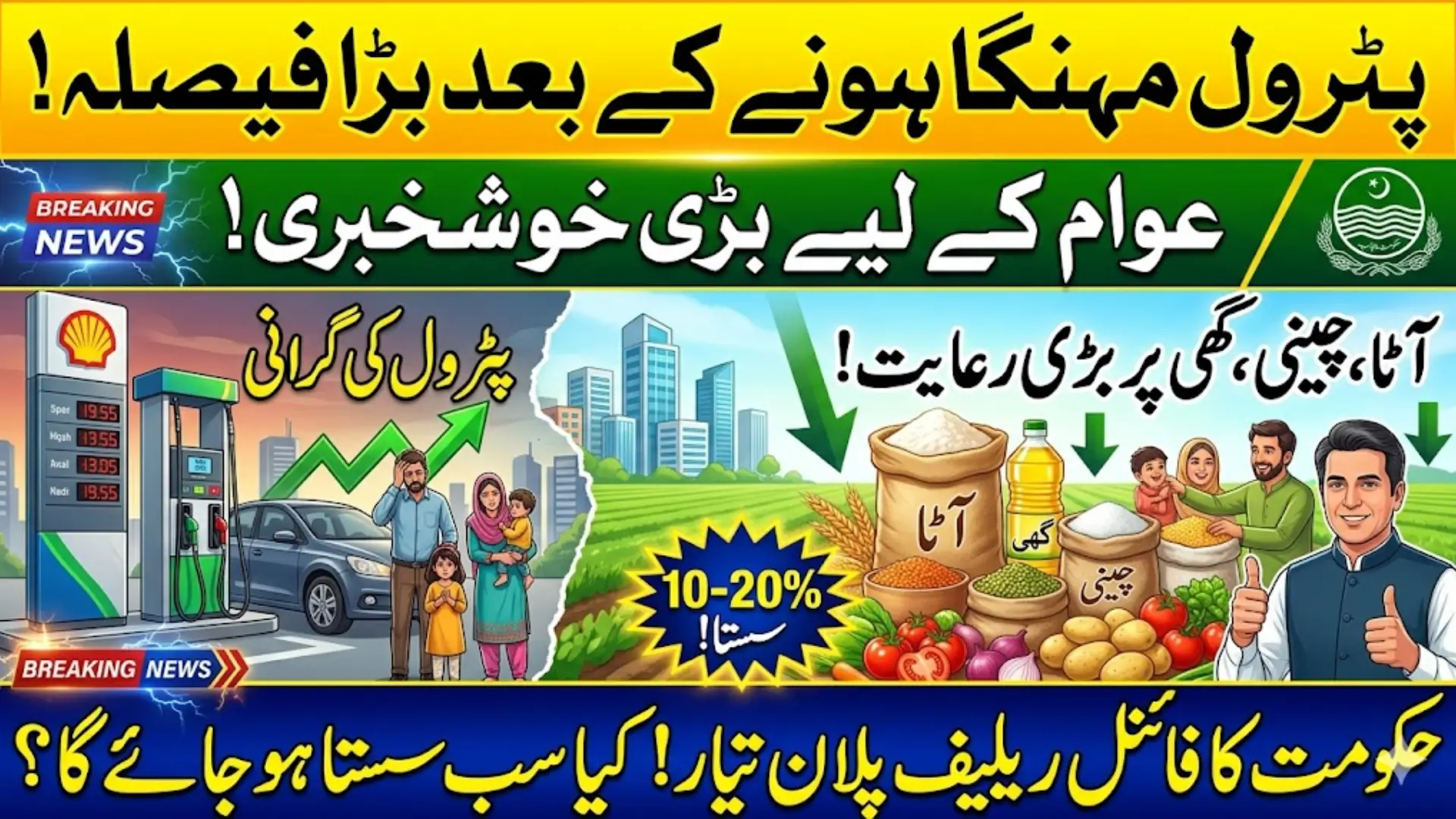
The Punjab government has taken a significant step toward protecting ordinary citizens from the economic pressure caused by recent increases in petroleum product prices. After fuel prices went up across the country, the cost of transportation rose sharply, pushing up prices of daily-use items in markets. In response, the government has now prepared a comprehensive relief plan focused on making essential goods affordable again for the common man.

According to sources close to the planning process, several subsidy models have been developed and are currently under review. These plans have been presented before senior officials, and a final decision is expected soon after approval from the Chief Minister. The goal is clear: to stop the ripple effect of fuel price increases from further damaging household budgets of working-class families.
You Can Also Read: How to Apply For PM Apna Ghar Program 2026 Know Step-by-Step Method and Requirements Details
Why Did the Government Step In?
When petroleum prices rise, the impact does not stay limited to fuel pumps. Transport costs go up, and every item that travels on a truck or vehicle becomes more expensive to deliver. Flour, vegetables, cooking oil, pulses, and other kitchen staples all become costlier within days. For low-income families who spend the majority of their earnings on food, even small price increases become a serious burden.
The Punjab government recognized this chain reaction and decided to intervene before prices in retail markets became completely unmanageable. Rather than waiting for things to stabilize on their own, the government moved quickly to develop targeted subsidy mechanisms that could directly reduce prices for consumers and traders at various points in the supply chain.
Three Main Subsidy Models Presented to the Government
Government planners have studied the supply chain carefully and identified three key points where subsidies can be applied to bring down prices. Each model has its own logic, strengths, and challenges. Here is a closer look at what has been proposed.
The following three options were formally presented to the government for review:
- Sahulat Bazaars subsidy model, offering 10 to 20 percent discount directly to consumers on essential items
- Registered Mandi traders subsidy model, targeting wholesale buyers in official marketplaces
- Goods transporters subsidy model, reducing freight costs to prevent price increases from reaching consumers
Each of these proposals comes with a different administrative approach. The Sahulat Bazaar model is the most direct, the Mandi model is broader but harder to monitor, and the transporter model targets the root cost issue but may have limited reach depending on where goods originate.
You Can Also Read: Punjab Government Has Been Started Registration For Fuel Subsidy Program 2026
Sahulat Bazaars: The Most Consumer-Friendly Option
Among the three proposals, the Sahulat Bazaar subsidy model has been identified as the most effective and transparent option. These are government-run utility stores and special market setups where people can buy daily-use items at government-controlled prices. By offering 10 to 20 percent discounts on essential goods at these outlets, the government can make sure that the relief reaches the public directly without passing through multiple middlemen.
This model is preferred because it removes the risk of the subsidy benefit being absorbed by traders or market intermediaries before it gets to the buyer. When a consumer walks into a Sahulat Bazaar and pays less for sugar, flour, or lentils, that is measurable and immediate relief. It also creates a formal record of transactions, making it easier to track spending and prevent misuse of public funds.
Mandi Traders Subsidy and Its Risks
The second model proposes giving subsidies directly to registered business owners operating in official wholesale markets, known as Mandis. The idea is that if traders pay less for goods, they will sell those goods at lower prices to retailers and ultimately to consumers. This approach covers a large volume of transactions and could have a widespread impact on retail prices across the province.
However, experts reviewing this model have pointed out several serious concerns. Transparency in Mandis is difficult to enforce, and there is a real risk that traders might report false purchase prices to claim subsidies while continuing to sell at inflated rates. Quality control also becomes an issue, as subsidized goods could sometimes be of lower standard. Additionally, goods arriving in Punjab from other provinces complicate the subsidy calculation, since the model was designed around locally sourced commodities.
Goods Transporter Subsidy: Addressing the Root Cause
The third model takes a different approach altogether. Instead of subsidizing goods or traders, it targets the transportation sector itself. Since rising fuel prices have directly increased freight charges, the government is considering giving financial relief to registered goods transporters. If transporters pay less for fuel or receive subsidies on their operational costs, they can be asked to keep freight rates stable, which in turn prevents prices from rising in the market.
This model addresses the problem at its origin point, which is logistically sound. However, it also carries practical limitations. Goods coming from outside Punjab cannot be covered under this scheme because the transporter may not be registered within the province. There is also the challenge of ensuring that transporters actually pass the savings on to traders rather than simply increasing their profit margins.
You Can Also Read: Punjab E-Bike Scheme 2026 Get On Easy Installment Plan Full Details
Comparison of All Three Subsidy Models
The table below provides a clear side-by-side comparison of all three proposed subsidy models, their primary benefits, and the key challenges associated with each:
| Subsidy Model | Key Benefit | Main Challenge |
|---|---|---|
| Sahulat Bazaars (10–20% Subsidy) | Direct consumer relief, transparent process | Limited reach to rural areas |
| Registered Mandi Traders | Covers wholesale distribution chain | Risk of fake pricing and wrong reporting |
| Goods Transporters | Reduces freight cost pressure on prices | Goods from other provinces limit effectiveness |
This comparison makes it easier for policymakers to weigh the pros and cons of each option before arriving at a final decision that balances effectiveness with administrative feasibility.
Challenges and Transparency Concerns Highlighted
Government advisors who reviewed the three proposals did not shy away from pointing out the difficulties involved. Transparency has been flagged as one of the most important issues across all models.
- Risk of artificial price inflation by traders even after receiving subsidies
- False or manipulated reporting of purchase quantities and prices
- Quality concerns related to subsidized goods entering the supply chain
- Reduced effectiveness due to goods arriving from other provinces not covered under the scheme
- Difficulty in tracking relief at the consumer level in Mandi-based distribution
These challenges do not make the plan impossible, but they do require the government to build in checks and safeguards before the scheme is launched publicly. A poorly monitored subsidy can create more problems than it solves.
You Can Also Read: Fuel Subsidy For Motorcycle KPK 2026 Full Details Step By Step
What Happens Next? Final Decision Awaited
As of now, all three models are under detailed review. Government officials are examining the practical aspects of each proposal, including cost estimates, administrative requirements, and potential impact on the general public. Multiple stakeholders have been consulted, and the feedback from district administrations and market committees is also being gathered.
The final decision on which model to adopt, or whether to combine elements from multiple models, will be taken after the Chief Minister gives formal approval. Until then, the government has assured the public that the process is moving forward rapidly and that concrete relief measures will be announced in the near future.
Why This Plan Matters for the Common Citizen?
For millions of families in Punjab, the price of flour, cooking oil, lentils, and vegetables is not just an economic statistic. It determines how many meals can be cooked in a day and whether children go to school with full stomachs. When fuel prices go up and grocery bills rise without any government intervention, it is working-class households that suffer the most while wealthier families absorb the shock with ease.
- Immediate reduction in the cost of buying daily food items from government-controlled outlets
- A signal that the government is actively monitoring market conditions and responding to public need
- Protection for low-income families from the cascading effects of fuel price hikes
- An effort to control artificial inflation created by opportunistic traders during periods of price uncertainty
Whether or not every aspect of the plan works perfectly, the intent to provide structured relief through a formal subsidy system is a step in the right direction. Citizens are hoping for quick implementation and genuine results on the ground.
Conclusion
The Punjab government’s move to prepare subsidy plans for essential goods following the petroleum price hike shows a proactive response to a real economic challenge faced by millions of households. With three well-defined models on the table and a transparent review process underway, there is genuine hope that targeted relief will reach those who need it most.
Once the Chief Minister gives formal approval, implementation is expected to begin quickly. Citizens, traders, and market observers will all be watching closely to see whether this plan delivers actual price relief or remains a policy proposal on paper. The success of this initiative could set an important example for how the government handles future economic shocks.
You Can Also Read: Govt Promises to Reduce Petrol Diesel Prices After War Full Details Here
FAQs
Why has the Punjab government prepared a subsidy plan for essential goods?
The government prepared this plan because the recent rise in petroleum prices pushed up transportation costs, which directly led to higher prices for essential food items in markets, creating financial stress for ordinary citizens.
How many subsidy models have been proposed, and what are they?
Three subsidy models have been proposed: subsidies at Sahulat Bazaars for direct consumer relief, subsidies for registered Mandi traders, and subsidies for goods transporters to reduce freight-related price increases.
Which subsidy model is considered the most effective by planners?
The Sahulat Bazaar model, which offers 10 to 20 percent discounts directly to consumers, has been identified as the most effective and transparent option because it bypasses middlemen and provides measurable relief at the point of purchase.
What are the main challenges identified with the Mandi trader subsidy model?
The main challenges include risk of artificial price inflation, false reporting of purchase quantities, quality control issues, and complications arising from goods coming from other provinces that fall outside the scope of the scheme.
When will the final decision on the subsidy plan be announced?
The final decision will be made after the Chief Minister formally approves one or more of the proposed models, and the government has indicated that a public announcement will follow the approval process shortly.
(Source: Dailyausaf)