

Govt Promises to Reduce Petrol Diesel Prices
Govt Promises to Reduce Petrol Diesel Prices federal government has finally given a strong signal to the people of Pakistan that petrol and diesel prices will be reduced once the current war-like situation comes under control. This announcement has come at a time when inflation is already affecting every household, and fuel prices have become one of the biggest concerns for ordinary citizens. From transport fares to vegetable prices, everything is directly linked with petroleum rates, which is why this statement has gained nationwide attention.
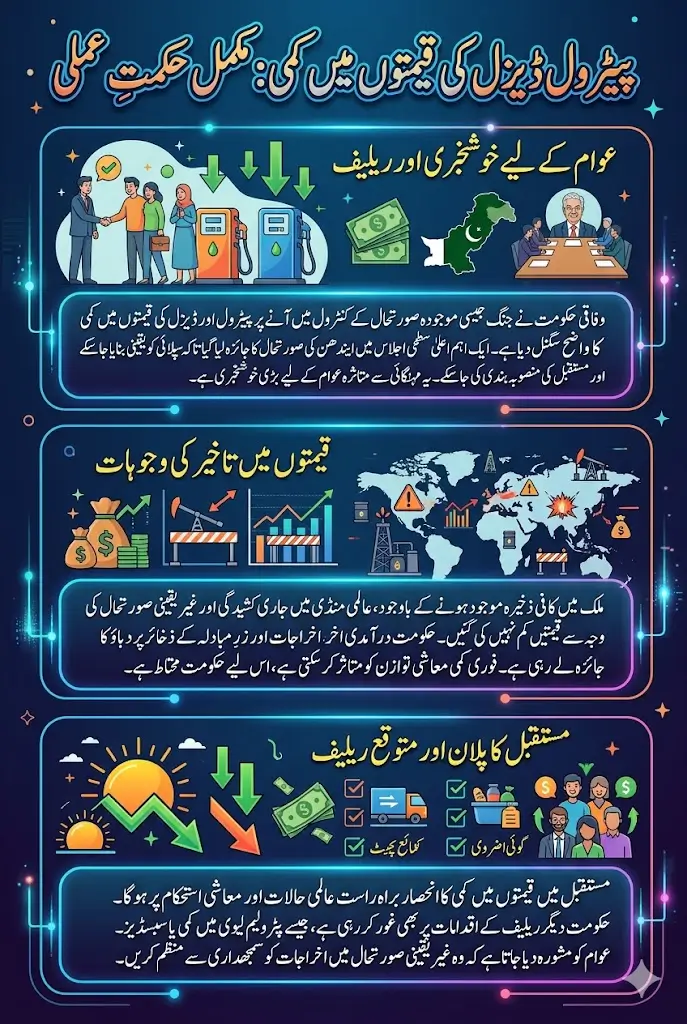
From what I have observed on the ground, people are not just worried they are tired of continuous price hikes. Daily wage earners, salaried individuals, and small business owners are all feeling the pressure. In such a situation, even a small reduction in petrol prices can bring significant relief. However, the government has clearly connected this relief with stability in the current crisis, which means the public may have to wait a little longer before seeing any actual decrease.
High-Level Meeting Held to Review Fuel Situation
A crucial meeting of the ruling coalition was held under the chairmanship of Defence Minister Khawaja Asif to review the ongoing fuel situation in the country. This was not just a routine gathering but a high-level discussion where economic and petroleum-related decisions were carefully evaluated. The purpose of this meeting was to ensure that Pakistan does not face any fuel shortage while also planning future price adjustments.
During the meeting, different ministries presented their assessments regarding supply, demand, and international market trends. The discussion focused on how Pakistan can maintain fuel availability despite global uncertainties. As someone closely following such developments, it is clear that when multiple ministries sit together on one issue, it reflects the seriousness of the situation and the government’s intention to avoid any crisis.
Key Government Officials Who Attended the Meeting
The meeting included several senior leaders from the federal government, each playing a critical role in shaping Pakistan’s economic and energy policies. Their presence ensured that all important aspects—from financial impact to supply chain management—were discussed in detail.
These officials are responsible for making decisions that directly affect petrol and diesel prices in the country. Their coordination is essential for balancing public relief with economic stability.
- Defence Minister Khawaja Asif led the meeting and supervised discussions
- Planning Minister Ahsan Iqbal shared insights on economic planning and development
- Finance Minister Muhammad Aurangzeb highlighted financial constraints and budget impact
- Minister of State for Petroleum Ali Pervaiz Malik provided updates on fuel supply
- Parliamentary Affairs Minister Tariq Fazal Chaudhry ensured legislative coordination
Their joint participation shows that fuel pricing is not a single-department issue but a national-level concern.
Current Petroleum Supply Situation in Pakistan
One of the most important updates from the meeting was that Pakistan currently has sufficient stocks of petrol and diesel. The government has taken immediate and effective steps to ensure uninterrupted supply across the country. This is a major relief because even rumors of shortage can create panic among the public.
From reports gathered across different cities, petrol pumps are operating normally, and there are no long queues or supply disruptions. The government is actively monitoring the situation to make sure that supply remains stable in both urban and rural areas.
To maintain this stability, the authorities have taken several practical steps:
- Continuous coordination with oil refineries and importers
- Strict monitoring of fuel distribution networks
- Prevention of hoarding and illegal storage
- Regular checks on petrol pumps to avoid artificial shortages
- Emergency planning to deal with any sudden disruption
These measures indicate that the government’s immediate priority is to avoid any supply crisis while working on long-term relief.
Why Fuel Prices Have Not Been Reduced Yet
Despite having sufficient fuel stocks, the government has not reduced petrol and diesel prices yet. This has raised questions among the public, but the reasons are mainly linked to global economic conditions. Pakistan relies heavily on imported oil, and international market trends directly influence local prices.
At present, global oil markets are facing uncertainty due to ongoing tensions. This has increased the cost of importing fuel, making it difficult for the government to provide immediate relief without affecting the national economy. From a policy perspective, sudden price cuts in such conditions can create financial imbalance.
Some of the key factors behind the delay include:
- Rising and unstable international oil prices
- Increased burden on foreign exchange reserves
- High cost of fuel imports during crisis conditions
- Government’s effort to maintain economic stability
This explains why the government is taking a cautious approach instead of making quick decisions.
Government’s Clear Promise on Price Reduction
The most significant outcome of the meeting was a clear and firm assurance from government officials that petrol and diesel prices will be reduced once the situation returns to normal. This statement has been given collectively by ministers, which adds credibility to the promise.
According to officials, “normal conditions” mean stability in global oil prices and improvement in the current crisis. Once these factors are under control, the government plans to pass on the benefit to the public. This shows that relief is not being ignored but delayed due to unavoidable circumstances.
To better understand the situation, here is a simple overview:
| Condition | Expected Government Action |
|---|---|
| Ongoing crisis or war situation | Petrol prices remain high |
| Stability in global market | Gradual price reduction |
| Improvement in economy | Additional public relief |
This table clearly explains how future fuel prices will depend on changing conditions.
Possible Relief Measures Under Consideration
Apart from reducing fuel prices, the government is also exploring additional relief measures to support the public. These measures are still under consideration, but they show that authorities are aware of the financial difficulties faced by citizens.
From discussions and policy signals, it is expected that the government may introduce targeted steps to ease the burden on specific sectors and low-income groups. Such measures can provide indirect relief even before fuel prices are reduced.
Possible options being discussed include:
- Reduction in petroleum levy to lower overall prices
- Introduction of subsidies for specific groups
- Relief packages for the transport sector
- Adjustments in fuel pricing formula
- Support for essential goods transportation
If implemented effectively, these steps can help reduce the overall impact of high fuel prices.
Public and Lawmakers Reaction to Government Policy
After the meeting, lawmakers from the ruling coalition expressed confidence in the government’s strategy. They believe that maintaining stability at this stage is more important than making short-term decisions that could harm the economy in the long run.
However, public reaction is more cautious and practical. People are waiting for real relief rather than announcements. From what I have seen in markets and transport hubs, citizens are hopeful but not fully convinced. They want to see actual reductions in petrol prices before trusting these promises.
Impact of Fuel Prices on Daily Life in Pakistan
Fuel prices have a deep impact on everyday life in Pakistan. When petrol and diesel become expensive, the effect is not limited to transport—it spreads across the entire economy. From groceries to utility services, everything becomes costly.
For the average citizen, rising fuel prices create multiple challenges:
- Increase in public transport fares
- Higher cost of food and essential items
- Rising delivery and logistics charges
- Financial pressure on small businesses
- Reduced purchasing power of households
This is why fuel price reduction is not just an economic decision but a necessity for public relief.
What Citizens Should Expect in the Coming Days
Looking ahead, citizens should remain informed and realistic about the situation. Immediate relief is unlikely unless there is a significant improvement in global and local conditions. However, the government’s assurance indicates that relief is part of the plan.
People should focus on managing their expenses carefully during this uncertain period. Staying updated with official announcements is also important to avoid misinformation.
Here are some practical steps for citizens:
- Follow official fuel price updates regularly
- Avoid panic buying or unnecessary storage of petrol
- Plan travel to reduce fuel consumption
- Keep track of government relief measures
- Adjust household budgets according to current conditions
These small steps can help people cope better during this time.
Conclusion
In conclusion, the government has made a clear commitment to reduce petrol and diesel prices, but this relief is directly linked to the return of normal conditions. For now, the focus remains on ensuring uninterrupted fuel supply and maintaining economic balance.
From a journalist’s perspective, this situation reflects a careful balancing act between public expectations and economic realities. While the promise of relief offers hope, its timing depends entirely on how quickly stability returns. Until then, the public will have to remain patient and prepared for gradual changes rather than immediate results.