Install 10 Million Smart Meters to Replace Old
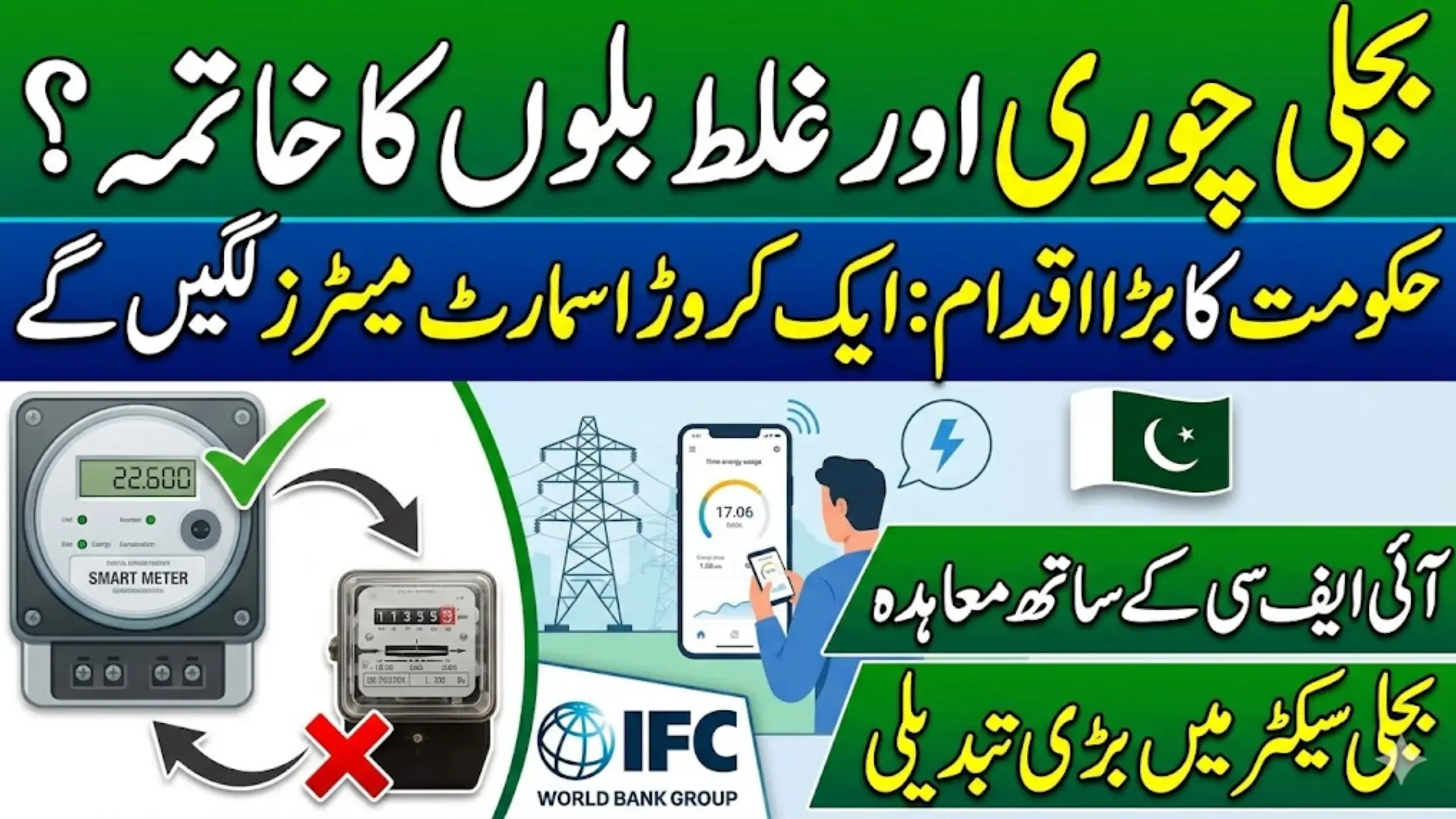
Pakistan has taken a major step toward modernizing its power sector by moving ahead with a large-scale smart metering project. The government has signed a Transaction Advisory Services Agreement with the International Finance Corporation (IFC), which is part of the World Bank Group, to support the rollout of smart electricity meters across the country.

This initiative aims to replace outdated electricity meters with advanced digital systems. The project targets around 10 million electricity connections and is expected to improve transparency, reduce power losses, and make billing systems more efficient for consumers and distribution companies.
You Can Also Read: CM Punjab Announces 10 Muft Bardana Bags Program Per Acre For Farmers – Know Complete Detail
Pakistan’s Smart Meter Project and IFC Role
The agreement with IFC marks an important development in Pakistan’s energy reform plan. Under this arrangement, IFC will act as a transaction advisor and provide technical and commercial guidance for the large-scale deployment of smart meters.
The advisory role includes assessing the best implementation model, which could be based on a public-private partnership or a service-provider system. This approach is designed to ensure efficiency and attract strong investment interest from both local and international markets.
- IFC will serve as transaction advisor for the project
- Techno-commercial assessment will be carried out
- Public-private partnership model will be evaluated
- Local and international investors will be encouraged
- Focus on long-term operational sustainability
The involvement of IFC is expected to bring global expertise into Pakistan’s energy sector, helping design a more stable and transparent system for electricity distribution.
Objectives of Smart Meter Installation Project
The main objective of the project is to digitize Pakistan’s electricity distribution system. The current system relies heavily on manual processes and outdated meters, which often lead to inefficiencies and financial losses.
With smart meters, the government aims to improve accuracy in electricity usage monitoring and reduce issues like electricity theft and incorrect billing. This shift is part of a broader reform strategy in the energy sector.
- Improve transparency in electricity consumption
- Reduce electricity theft through monitoring systems
- Ensure accurate and automated billing
- Minimize manual reading and human error
- Strengthen financial sustainability of power companies
This transition is expected to modernize the entire power distribution structure and improve trust between consumers and utility providers.
You Can Also Read: CM Punjab Kisan Card 2026: Bill Payment from April 16, Loan Re-Credit in 24 Hours
Smart Meter Technology and Benefits
Smart meters, also known as Advanced Metering Infrastructure, are digital devices that record electricity usage in real time. These meters allow utility companies to monitor consumption patterns and manage electricity distribution more effectively.
The system reduces dependency on manual meter readings and provides instant data, which helps in detecting irregularities and improving service quality. It also benefits consumers by offering more accurate billing and better energy awareness.
- Real-time electricity usage monitoring
- Automatic and accurate billing system
- Detection of power theft and losses
- Reduced need for manual meter reading
- Improved energy management for consumers and companies
This technology is widely used in many developed countries and is now being introduced in Pakistan to modernize the energy infrastructure.
Financial Structure and Investment Model
The project is also designed to attract investment from both domestic and international sources. The government aims to develop a financial model that supports long-term sustainability and efficient execution.
A key part of the plan is to involve private sector participation in financing, installing, and maintaining the smart metering infrastructure. This reduces pressure on public funds and improves project efficiency.
- Private sector participation in infrastructure development
- Investment opportunities for international companies
- Cost-sharing through public-private partnerships
- Long-term operational contracts for maintenance
- Reduced financial burden on government resources
This financial structure is expected to make the project more scalable and efficient over time.
You Can Also Read: Good News! Punjab Govt Prepares Subsidy Plans to Provide Relief on Essential Goods
Implementation Plan and Nationwide Rollout
As part of the rollout strategy, all new electricity connections will now be issued with smart meters instead of traditional ones. This policy marks a complete shift in how new users are connected to the power grid.
In addition, all existing three-phase meters will be gradually replaced with smart meters within a defined timeline. This ensures a phased and controlled transition across the entire distribution system.
Difference Between Old And New Electric Meters
Before and After Smart Meter Implementation
| Old System Features | New Smart Meter System |
|---|---|
| Manual meter reading required | Automated real-time monitoring |
| Higher chances of billing errors | Accurate and instant billing |
| Limited consumption tracking | Digital consumption tracking |
| Higher electricity theft risk | Theft detection through smart alerts |
| Delayed reporting of usage data | Instant data reporting and analysis |
This transition highlights a major upgrade in Pakistan’s electricity distribution system, focusing on efficiency and transparency.
Expected Impact on Power Sector
The installation of smart meters is expected to bring significant improvements to Pakistan’s power sector. It will reduce technical and commercial losses while improving revenue collection for distribution companies.
Consumers will also benefit from better billing accuracy and improved understanding of their electricity usage. Over time, this can lead to more responsible energy consumption and reduced wastage.
You Can Also Read: How to Apply For PM Apna Ghar Program 2026 Know Step-by-Step
Final Words
The smart meter project represents a major shift in Pakistan’s energy management system. By introducing digital monitoring and advanced infrastructure, the government aims to create a more efficient and transparent power sector.
With IFC’s support and private sector involvement, the initiative is expected to bring long-term improvements in electricity distribution. It also sets the foundation for a modern energy system that aligns with global standards.
You Can Also Read: Infinix Note 60 Pro Price In Pakistan
FAQs
What is the main goal of the smart meter project?
The goal is to replace old meters with digital smart meters to improve efficiency and transparency.
How many electricity connections will be covered?
The project aims to cover around 10 million electricity connections nationwide.
Who is supporting the project?
The International Finance Corporation (IFC) is acting as a transaction advisor.
What are smart meters used for?
They provide real-time monitoring of electricity usage and improve billing accuracy.
When will the new system be fully implemented?
The rollout is planned in phases, with new connections receiving smart meters first.